
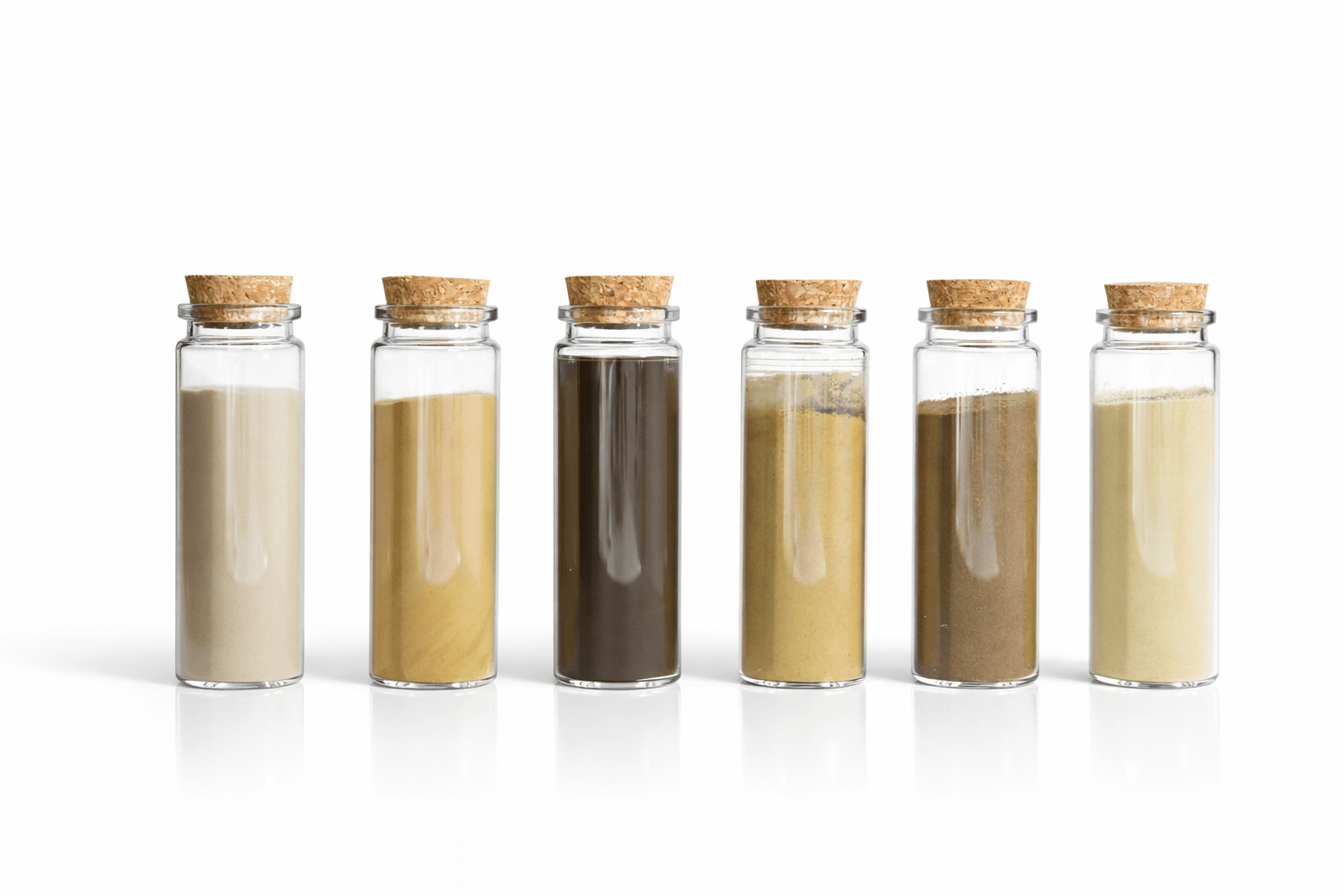

Organic Reishi Extract: Understanding 2% vs. 4% Triterpenoids & USDA NOP Compliance
Yes, our organic Ganoderma lucidum extract is available in two strengths: 2% and 4% triterpenoids.
Organic Reishi (Ganoderma lucidum) extract is widely used by US dietary supplement and functional food brands for its long history in traditional use and its growing body of modern scientific research. Among the many bioactive components of Reishi, lanostane-type triterpenoids, commonly referred to as ganoderic acids, receive particular attention for their role in defining extract potency and identity.
For American brand owners sourcing organic Reishi extract from China, a recurring question arises:
Can triterpenoid standards be provided for organic Reishi extract, and if so, how reliable and meaningful are they under USDA organic rules?
1. Organic Certification vs Active Compound Standardisation
What Organic Certification Does — and Does Not — Regulate
Under USDA National Organic Program (NOP) rules, organic certification governs:
- How Reishi mushrooms are cultivated
- Which substrates and inputs are allowed
- How the mushrooms are processed
- Which solvents may be used
- How contamination and commingling are prevented
However, organic certification does not regulate active compound levels, including:
- Triterpenoids
- Polysaccharides
- Beta-glucans
In other words:
There is no USDA-mandated triterpenoid minimum for organic Reishi extract.
This is a critical distinction for US brands. Any triterpenoid specification you see on a Certificate of Analysis (COA) is a commercial quality parameter, not an organic compliance requirement.
2. Can Triterpenoid Standards Be Provided for Organic Reishi Extract?
Short Answer: Yes — as a Commercial Specification
Triterpenoid standards can be provided for organic Reishi extract, provided that:
- They are analytically defined
- They are method-specific
- They are achievable under organic processing rules
- They are supported by historical batch data
Most reputable Chinese suppliers express triterpenoid content as:
- Total triterpenoids or Triterpenoids
Why Triterpenoid Levels Are Not an “Organic Requirement”
Organic standards (NOP or EU Organic) focus on process integrity, not phytochemical optimisation. A Reishi extract may be fully organic even if its triterpenoid content is relatively low, provided that:
- The mushrooms are organically cultivated
- Approved solvents are used
- The extraction process is compliant
Therefore, triterpenoid levels should be treated as:
A quality and positioning tool, not proof of organic status.
3. How Triterpenoid Levels Are Typically Measured
Common Analytical Approaches
Chinese suppliers usually test triterpenoids using one of the following methods:
Oleanolic acid spectrophotometric
- It is widely used in industry to evaluate the total triterpenoid content in Organic Reishi extracts.
- Suitable for quality control, batch consistency, and commercial specifications.
HPLC (High-Performance Liquid Chromatography)
- Quantifies specific ganoderic acids
- Commonly used for export-grade extracts
- Allows use of reference markers such as:
- Ganoderic acid A
- Ganoderic acid B
- Ganoderic acid H
In the production of organic Ganoderma lucidum extracts, oleanolic acid spectrophotometric analysis is widely used to assess the total triterpenoid content. If analysis of certain single components in the triterpenoids (such as Ganoderic acid A and Ganoderic acid B) is required, HPLC methods can be used.
Lack of a Global Reference Standard
There is currently no globally harmonised reference standard for “total triterpenoids” in Reishi.
As a result:
- Different labs may use different marker compounds
- Results from different methods are not always directly comparable
- Absolute numbers must be interpreted in context
This is why method disclosure is essential.
4. Typical Triterpenoid Ranges in Organic Reishi Extract
Based on industry data and production experience:
- 1–2% triterpenoids1-2%
- Broad-spectrum fruiting body extracts
- Milder taste
- Suitable for daily wellness formulas
- 2–4% triterpenoids2-4%
- More concentrated dual extracts
- Clear bitterness profile
- Common in US premium supplements
- Above 4% triterpenoids
- Highly concentrated extracts
- Strong bitterness
- Requires careful formulation
5. The Role of Extraction Method in Triterpenoid Standardisation
Why Dual Extraction Is Essential
Triterpenoids in Reishi are alcohol-soluble, not water-soluble.
Hot water extraction alone cannot yield meaningful triterpenoid levels.
Therefore, standardised organic Reishi extracts rely on::
- Dual extraction (hot water + organic-compliant alcohol)
- Careful solvent recovery
- Compliance with NOP-approved solvents
Without alcohol extraction, claimed triterpenoid levels are unreliable.
Extraction Ratio and Its Impact
Higher extraction ratios (e.g. 15:1 vs 8:1) typically result in:
- Higher triterpenoid concentration
- Lower polysaccharide percentage
- Stronger taste
US brands should assess:
- Target positioning
- Dosage form
- Consumer tolerance for bitterness
6. Batch-to-Batch Consistency: What US Brands Should Expect
Why Natural Variability Exists
Even with a fixed process, triterpenoid levels vary due to:
- Strain differences
- Cultivation substrate (wood vs grain)
- Geographic origin
- Harvest timing
- Fruiting body maturity
This variability is natural and unavoidable.
How Reputable Suppliers Control Consistency
High-quality suppliers maintain consistency by:
- Fixing the extraction process
- Setting realistic minimum guarantees
- Using historical batch data
Rather than promising identical numbers, they guarantee:
“Not less than (NLT) X% triterpenoids by defined method.”
7. Can Triterpenoid Data Be Verified by Third-Party Laboratories?
Yes — and US Brands Should Do So
Triterpenoid data can be independently verified by:
- ISO / CNAS-accredited laboratories in China
- US-based analytical labs
- University or contract research labs
However, US brands should ensure:
- The same analytical method is used
- The same reference standard is applied
- Results are interpreted within method tolerance
Comparing results across different methods without alignment can lead to confusion.
8. Interpreting COAs: Common Pitfalls for US Buyers
“Total Triterpenoids” Without Detail
Many COAs list:
- “Total triterpenoids: X%”
- “Triterpenoids: X%”
Without specifying:
- Marker compounds
Such data is not fraudulent, but it is limited in comparability.
Why Triterpenoids Alone Do Not Define Quality
Triterpenoids are only one part of Reishi’s profile.
A robust quality assessment should also include:
- Polysaccharide content
- Beta-glucan levels
- Confirmation of fruiting body origin
High triterpenoids with poor polysaccharide integrity may not represent balanced quality.
**9. Organic Compliance and Triterpenoids: No Conflict When Done Correctly
From a regulatory standpoint:
- NOP does not prohibit triterpenoid standardisation
- Organic solvents may be used if approved
- Analytical testing methods are not restricted
As long as:
- Cultivation is organic
- Processing follows NOP rules
- No prohibited substances are used
Triterpenoid specifications are fully compatible with organic certification.
10. Practical Examples of Commercial Specifications
For illustration:
- Organic Reishi Extract – 2% Triterpenoids
- Dual extraction
- Moderate bitterness
- Balanced polysaccharide profile
- Organic Reishi Extract – 4% Triterpenoids
- Higher concentration
- Stronger bitterness
- Targeted therapeutic positioning
Both are valid organic products; the difference lies in commercial intent, not compliance.
11. Key Takeaways for US Brand Owners
- Triterpenoid standards are optional, not regulatory.
- USDA organic certification does not mandate triterpenoid levels.
- Batch consistency relies on process control, not absolute uniformity.
- Triterpenoids should be evaluated alongside polysaccharides
- Specifications should be written into quality agreements, not assumed.
Brands that treat triterpenoid specifications as part of a broader quality strategy — rather than as a shortcut to perceived potency — are better positioned to build credible, compliant, and sustainable organic product lines.